League Secretary
- 4.8
- Rating
- 50.00K
- Installs
- Free
- Price

 Analysis by App-foxy
League Secretary is the kind of sports app that makes sense only after you have experienced the small chaos of running a bowling league. Scores, schedules, standings, team details, and league communication can easily end up scattered between paper sheets, group chats, spreadsheets, and memory. In my experience, this app is most useful when it becomes the shared place everyone checks before and after league night.
Developed by NABSO, LLC, the free app is built for bowling league administration rather than casual scorekeeping or general sports news. Its store summary describes it as a place for all of your bowling league data, and that focus is important: it is aimed at organized league activity, with the secretary’s workflow at the center. The app is rated for Everyone, runs on Android from version 6.0 onward, and its current version is 6.2.3. That broad device compatibility is helpful for mixed-age leagues where not everyone owns a recent phone.
I also noticed that its reputation is stronger than its modest install count might suggest. It has a 4.8 average from around 750 ratings and more than 190 written reviews, with over 50 thousand installs. Those figures do not replace personal testing, but they do fit the experience of an app serving a specific audience well rather than trying to be everything for every sports fan.
You May Also Like

 AccuWeather: Weather Radar
AccuWeather Review: A Quick, Clear Forecast for Everyday Decisions
For everyday plans, the best forecast is the one you can understand quickly. AccuWeather makes rain timing, radar, and local conditions easy to act on, with a few trade-offs.

 Hill Climb Racing
Why Hill Climb Racing Still Turns Crashes Into One More Run
A tiny car, a bumpy hill and one more upgrade: Hill Climb Racing keeps resurfacing because its simple chaos makes every near-miss feel personal.

 AliExpress - Shopping App
AliExpress Makes Global Shopping Feel Personal, but Shoppers Bear the Risk
AliExpress turns a global marketplace into a pocket-sized discovery engine. Its reach is useful, its shopping loop compelling, and its trade-offs easy to miss.

 Lords Mobile: Kingdom Wars
Lords Mobile Is a Kingdom-Building Routine, Not a Quick Match
A case-by-case verdict on the building, battles, device demands, and social commitments that make Lords Mobile rewarding for some players and exhausting for others.

 PDF Scanner app - TapScanner
TapScanner Makes Paperwork Easier to Capture, Check, and Share
TapScanner makes scanning with a phone feel less like a rescue operation and more like a dependable step in getting work done. Its capture tools are useful, though not flawless.

 Block Blast!
 Shows How Much a Puzzle Game Can Leave Out
A quiet grid game shows why puzzle players increasingly value instant clarity, repeatable skill and low-pressure play—and where the genre still needs to catch up.
More From Our News Desk
View All News


How clearly the league information is presented
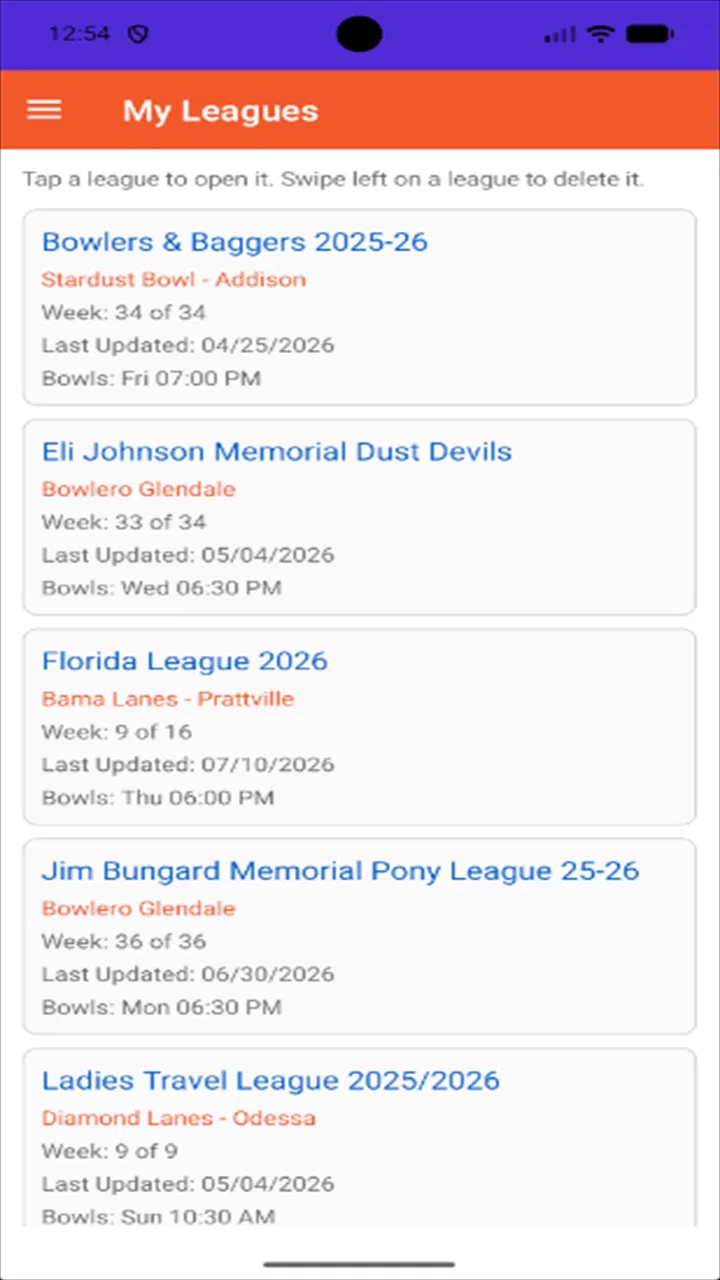
The first real test for an app like this is not whether it looks exciting. It is whether a bowler can open it between frames and quickly find the information they need. League Secretary is at its best when used as a reference tool: checking what is happening in the league, confirming details, and returning to the same information repeatedly during a season.
That makes readability more important than decoration. Bowling leagues often include people with very different levels of comfort with phones. Some members may be confident with apps, while others may only want to check a schedule or see how their team is doing. A focused sports utility has an advantage here because the purpose is narrower than a social network or a full league-management website. There are fewer distractions competing for attention.
My practical advice is to spend a few minutes exploring the app before league night, rather than trying to learn it while standing beside the lanes. Find the areas you expect to use most, then make a personal routine around them. For a regular bowler, that might mean checking upcoming league information before leaving home, reviewing results afterward, and using the standings as a quick reference during conversation. For a secretary, the routine is more involved, but the same principle applies: learn the path to common information before the room becomes noisy and busy.
The app’s strongest accessibility quality is this concentration on one recognizable activity. It does not ask a bowling league to translate a general project-management system into bowling language. That can reduce mental effort for people who already understand league terms but do not want to manage a complicated digital workspace.
There is still a difference between information being available and information being easy for every person to read. A user with low vision may need to adjust the phone’s own display settings, hold the device closer, or use built-in magnification. I would not assume that every screen will remain equally comfortable at enlarged text sizes. Anyone relying on large text should test the screens they use most before encouraging an entire league to adopt it.
A useful routine for league night
One non-obvious benefit of a centralized league app is that it can reduce the number of questions directed at one person. In many leagues, the secretary becomes the human search engine: “What is our position?”, “When do we bowl next?”, or “Which team are we facing?” If members can check the same source themselves, the secretary has more time for actual administration.
That only works if the league agrees on the app as its reference point. I would recommend telling members exactly what information belongs there and when they should expect it to be updated. Without that shared habit, people may continue comparing the app with old screenshots, paper notes, or messages in a chat group, creating more confusion instead of less.
For a bowler who only wants live lane scoring, technique advice, or a personal record of every ball, this is probably the wrong starting point. Its value is tied to league organization. The more your need is connected to a specific league, the more relevant it becomes; the more your need is individual practice, the less compelling it is compared with a dedicated bowling tracker or scoring tool.
Motor, sensory, and cognitive considerations in real use
Bowling centers are demanding places for phone use. They can be loud, brightly lit, crowded, and full of interruptions. A user may be carrying a bowling ball, wearing a wrist support, dealing with limited hand movement, or trying to operate a phone with one hand. Those circumstances matter more than a calm test at home.
For people with motor limitations, the most helpful approach is to reduce unnecessary handling. I would open the app before walking to the lanes, check the information I need, and avoid trying to navigate while moving through a crowded approach area. If a teammate or family member normally helps with the phone, a shared routine can make the app more practical than expecting one person to operate it under pressure.
Users with tremors, reduced dexterity, or difficulty making precise taps may find dense controls tiring. A phone stand or a stable surface can help, although it is wise to keep the device away from the active bowling area. Voice control provided by the operating system may assist with opening the app or basic device actions, but I would not assume that every in-app task can be completed hands-free. The app should be treated as something to use deliberately, not while carrying equipment or preparing to bowl.
For users who are deaf or hard of hearing, a visual information source can be useful because a bowling center’s announcements may be difficult to follow. League members can check the app rather than depending entirely on spoken updates. This is especially valuable when a person is seated away from the main group or when background noise makes conversation unreliable.
For blind users or people who depend heavily on a screen reader, the experience deserves a careful personal trial before the app becomes the league’s only channel. I would not promise that every control, label, or data area is exposed equally well to assistive technology. A league trying to include screen-reader users should keep a human alternative available, such as a secretary or teammate who can provide the same information in an accessible format.
Color perception is another practical consideration. Standings and league information can sometimes be easier to interpret when position, status, or changes are communicated through text as well as color. I would avoid assuming that color alone is sufficient. If a member has difficulty distinguishing colors, the league secretary should be prepared to explain the relevant information directly rather than relying on a visual cue.
Supporting different attention levels
Not every user approaches a league app with the same amount of time or concentration. A regular secretary may spend a long period managing information, while a casual substitute bowler may open the app for one quick check. The app is most inclusive when the league’s communication practices respect both groups.
That means avoiding the assumption that everyone will read every screen or remember every detail. A useful secretary can summarize important changes in plain language, especially when a schedule or league arrangement changes. The app can serve as the detailed reference, while a short message or spoken reminder helps people who have limited time, memory difficulties, or lower confidence with technology.
This is one of the clearest trade-offs I see. Centralization can make information more consistent, but it can also make a league less welcoming if members are told to “just use the app” and left alone. The software can support inclusion; it cannot replace patient onboarding or considerate communication.
Access when the setting is noisy, busy, or inconvenient
League Secretary is more useful when treated as part of a before-and-after routine than as a tool to operate during every moment of play. Before leaving home, a bowler can review the relevant league information. At the center, the phone can be used during a break or while seated. Afterward, members can check the latest details without waiting for a paper handout.
This approach helps users who find the bowling center overwhelming. People with sensory sensitivities may prefer to avoid holding a bright screen near the lanes, and people with anxiety may appreciate knowing the schedule before arriving. Someone who processes written information slowly can review it privately rather than trying to keep up with a fast group announcement.
It also helps people whose circumstances change from week to week. A parent may need to check league details while managing children. A worker coming directly from a shift may have only a short window to confirm what is happening. A substitute bowler may need a quick orientation without asking several people. In each case, the app’s value comes from making league information available in a repeatable place.
However, digital access is not the same as universal access. A person may have an older phone, limited data, poor reception inside the bowling center, or no interest in installing another app. The minimum Android requirement of version 6.0 covers a wide range of devices, but compatibility alone does not solve every practical problem. A league should not make attendance or participation depend on a member having a particular phone.
For that reason, I would keep one backup method. A printed schedule, a phone call, or a direct message from the secretary can protect members who cannot access the app at a particular moment. This is not a criticism of the product so much as a sensible rule for any league that wants to include everyone, including visitors and occasional substitutes.
Where it fits beside familiar alternatives
The usual alternative is a mixture of spreadsheets, paper records, email, and group messaging. That combination can be flexible, but it often creates multiple versions of the truth. One person has the latest spreadsheet, another has an old photo of the schedule, and a third relies on something mentioned verbally at the lanes. A dedicated league app has a clear advantage when the goal is to bring recurring league information together.
A spreadsheet may still be better for a secretary who wants complete control over formulas, custom reports, or unusual league rules. It can also be easier to inspect on a large computer screen. A group chat may be better for urgent conversation, arranging substitutes, or sharing informal updates. Neither alternative is automatically superior; they serve different jobs.
My preferred arrangement would be to use League Secretary for structured league information and keep another communication method for conversation and exceptions. That division prevents the app from being forced into the role of a chat room while also preventing important league details from disappearing in a stream of messages.
Remaining barriers and the people who may want another option
The central limitation is that the app’s usefulness depends on league participation and accurate upkeep. If only a few members use it, or if information is not maintained consistently, the experience becomes less reliable. A polished interface cannot compensate for missing updates or unclear responsibility. Before adopting it for a whole league, I would make sure everyone knows who handles the administrative side and how members should report a problem.
There is also a learning curve for people who rarely use sports apps. Even a focused tool can feel unfamiliar when someone is already tired, distracted, or embarrassed about asking for help. A short demonstration at the beginning of the season would do more for adoption than simply telling members where to download it. Pairing less confident users with a teammate is another simple improvement.
People who need extensive customization may find a dedicated league app less suitable than a general database or spreadsheet. The same is true for leagues with highly unusual administrative processes. If your priority is building bespoke forms, exporting elaborate reports, or combining bowling with several unrelated activities, a broader tool may offer more control.
Privacy and device comfort also deserve ordinary common sense. Members should use a device they understand, keep it secured, and avoid passing phones around unnecessarily. A secretary should share only the information the league genuinely needs. I am not suggesting a specific policy for the app; I am saying that a centralized record makes it worth agreeing on sensible local practices.
Another barrier is social rather than technical. Some bowlers enjoy the personal contact of hearing results announced or receiving a paper sheet. Moving everything to a phone can make the league feel less communal for them. The best implementation does not erase those traditions. It gives people another dependable way to find information while preserving the human side of league night.
If accessibility is a deciding factor for your group, test the app with the actual people who will use it. Ask someone with low vision to read the screens, someone with motor difficulties to complete common actions, and someone who struggles with noisy environments to try the before-and-after routine. That kind of local trial is more useful than assuming a general accessibility label guarantees a comfortable experience for everyone.
My inclusive verdict for bowling leagues
I see League Secretary as a practical choice for organized bowlers who are tired of hunting through scattered league information. Its sports focus, free price, broad Android compatibility from version 6.0, and strong 4.8 average make it easy to consider, especially for a league that wants one shared reference point. The developer, NABSO, LLC, has kept the product centered on the secretary’s job rather than turning it into a general-purpose social platform.
What I like most is the opportunity to make league information less dependent on one person’s memory. A bowler can check details privately, revisit them at a convenient time, and avoid asking the same question during a noisy evening. That supports different abilities and schedules, provided the league also offers help to people who cannot or do not want to use the app alone.
I would recommend it to league secretaries, team captains, regular bowlers, and families who need a consistent way to follow organized bowling. I would be more cautious for someone seeking a personal training tool, a hands-free experience, a fully customized database, or a guaranteed screen-reader-first workflow. In those situations, another option may fit better, or this app may need to be paired with a human or technical backup.
The fairest way to judge it is not by asking whether it solves every accessibility problem. It does not. Ask instead whether it makes your particular league’s information easier to find, easier to share, and less dependent on informal memory. For a league willing to combine the app with clear communication and a backup for members who need one, that is a meaningful improvement.
After using it as a league reference rather than expecting it to replace every other tool, I would recommend giving League Secretary a trial with a small group first. Let a secretary, a regular bowler, a substitute, and someone who needs larger text or extra assistance test the same common tasks. If those users can find what matters without unnecessary stress, the app is likely to earn a useful place in your weekly routine.
My final view is positive but conditional: this is a focused, sensible sports app for bowling leagues, not a universal answer to every user’s needs. Its inclusive value comes from the combination of centralized information, flexible timing, and thoughtful support from the people running the league. Used that way, it can make participation feel more manageable without taking away the conversations and personal help that make a bowling league welcoming.
FAQs for League Secretary
01What is League Secretary, and what can I use it for?
League Secretary is a sports league management app designed to help players, coaches, organizers, and supporters follow league activity in one place. Depending on the league’s setup, you can use it to view fixtures, results, standings, team information, schedules, announcements, and sometimes player statistics. Its usefulness depends on whether your specific league or organization is registered on the platform.
02Can I use League Secretary without creating an account?
In many cases, you can browse publicly available league information without registering, such as schedules, scores, standings, and team details. However, certain features may require an account or access provided by a league administrator. The exact requirements can vary between leagues, so users should check whether their organization has enabled private content, member tools, notifications, or other account-based features.
03Does League Secretary support different sports and competitions?
League Secretary is intended for organized sports and can be used by different types of leagues, clubs, and competitions rather than being limited to a single team or tournament. Available sports, divisions, and features depend on what each organization has configured. Before downloading, it is worth confirming that your league appears in the app and that its schedules and results are actively maintained.
04How accurate and up to date are the scores, fixtures, and league tables?
The app can provide a convenient overview of fixtures, results, standings, and other competition information, but the accuracy depends on league officials, administrators, or participating teams entering and approving data. Delays may occur after a match, especially when results are submitted manually. For important changes, users should compare the information with official league announcements or contact the competition organizer.
05Are notifications available in League Secretary, and does the app require an internet connection?
League Secretary may offer notifications or updates for fixtures, results, announcements, and other league activity, although the available options depend on the app version and the organization managing the competition. An internet connection is generally needed to load current information and synchronize updates. Previously viewed content may remain accessible temporarily, but users should not expect every feature to work fully offline.
Pros
- Keeps league schedules
- standings
- and results organized in one place.
- Useful for tracking multiple teams and competitions from a single account.
- Quick access to fixtures helps players plan matches and travel.
- Clear team statistics make it easier to follow season progress.
- Helpful alerts can keep users informed about schedule or result changes.
Cons
- Features may vary depending on whether the league supports the platform.
- Some information can be delayed if organizers do not update results promptly.
- The interface may feel crowded when following many teams or competitions.
- Requires an internet connection for most live league information.
- Less useful for casual players outside registered leagues.

League Secretary
Gallery